
Ever wondered why some players at the poker table seem to have an edge simply because of where they sit? Understanding poker table positions can turn a solid game into a smarter one and help you make clearer choices as hands develop.
Whether you’re new to poker or looking to sharpen your strategy, knowing each position—its name, role and how it affects play—really makes a difference. Read on and you’ll see how small shifts in position change the way hands are played.
Ready to sharpen your seat-time decisions? Let’s walk through each position, explain why it matters and give practical context so you can play with more confidence every time you take a seat.
What Are Poker Table Positions?
Poker table positions refer to where each player sits relative to the dealer. That spot determines the order of action and influences the information you have when making decisions.
Action in poker moves clockwise, so who acts first and who acts last changes with every betting round. Players who act later get to observe others’ choices before committing chips, whereas those who act early must decide with less information. That difference affects the kinds of hands you can profitably play from each seat.
Positions aren’t a guarantee of success, but they shape strategy. Keep in mind that sensible bankroll management and clear limits matter more than the seat itself.
If you want to see how positions look around the table, the next section explains the usual layout and how the dealer button moves things along.
Why Does Position Matter in Poker?
Position matters because it changes the quality of information available when you act. Later positions allow you to see bets, raises and folds from more players before you decide, which helps you judge whether to call, raise or fold.
This informational edge also gives more scope for flexible play. From later seats you can widen the range of hands you play or use your position to pressure opponents. Conversely, early spots generally require tighter, more cautious selection since you risk acting without knowing others’ intentions.
Position interacts with many other elements—stack sizes, player tendencies and table dynamics—so it’s a strategic tool rather than a standalone advantage.
Overview of Poker Table Layouts
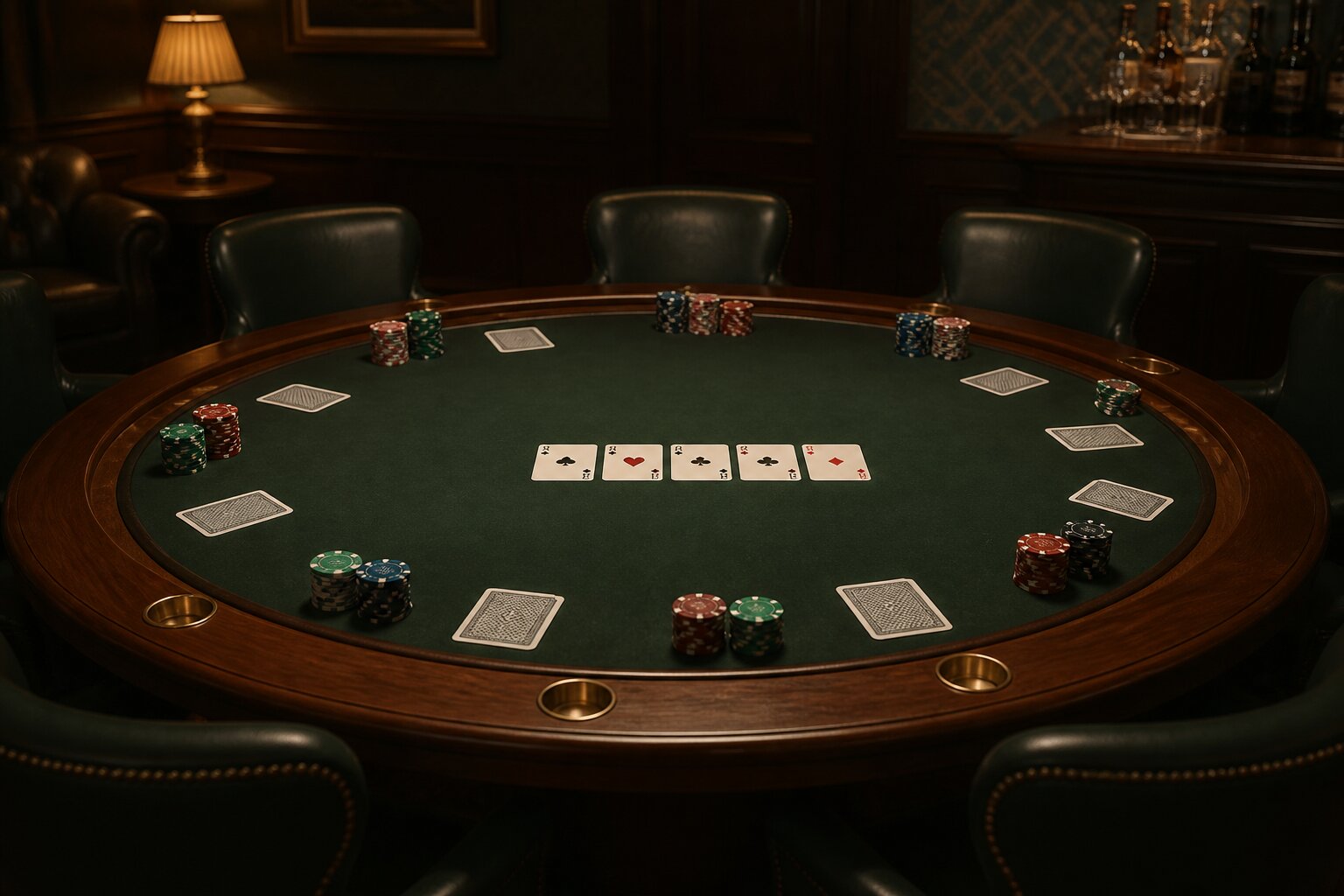
Most poker tables are arranged so every player faces the same action and the dealer button cycles around the table. Each seat has a conventional name reflecting where it sits in the betting order.
Seats immediately to the left of the button are usually called late positions, those further left are early positions, and the ones in between are middle positions. The small blind and big blind are distinct because they post forced bets before the cards are dealt, setting the initial stakes for each hand.
Understanding this layout helps you predict how a hand will flow and how your decisions will be seen by others. Now let’s look at the device that marks the dealer and keeps that rotation moving.
The Dealer Button: What Is Its Role?
The dealer button is a small marker that indicates which player is the nominal dealer for the current hand and sets the order of play. It moves one seat to the left after each hand so every player experiences each position over time.
Its presence determines who posts the blinds and where each betting round begins and ends. Acting from the button is often beneficial because that player is last to act in most betting rounds, allowing them to use information from every other player’s action.
Knowing how the button affects the flow of play is key to reading the table and planning your approach.
This leads naturally into understanding the broad groups of positions you’ll hear discussed at most tables: early, middle and late.
Understanding Early, Middle, and Late Position
Poker positions are commonly grouped into early, middle and late, reflecting the order in which players act in a betting round.
Early position includes the first seats to act after the blinds. Decisions here are made with limited information, so players tend to be selective about the hands they play. Middle position sits between the extremes, offering more context than early but still leaving several opponents to act afterwards. Late position, which includes the dealer button, allows the most observation of others’ actions and therefore the most flexibility in strategy.
Each group carries different tactical considerations: early positions require tighter hand selection, middle positions allow a mix of caution and opportunism, and late positions offer leverage to exploit the table’s tendencies.
Under the Gun: Definition & Importance
“Under the Gun” (UTG) refers to the first player to act after the big blind. This seat is one of the most demanding because it faces the full table’s reactions without prior betting information.
Because UTG acts before others, the range of hands played from this seat is usually narrower and more robust. The terms UTG+1, UTG+2 and so on denote the seats that follow, each with marginally more information than the one before. These early seats collectively shape the opening dynamics of a hand and set the tone for subsequent betting rounds.
Recognising when you’re in UTG or a UTG+ seat helps you gauge how conservative or aggressive you should be with particular holdings.
Under the Gun Plus Positions Explained
As play moves clockwise, each UTG+ position takes the earlier player’s place in the order. While the practical differences between UTG and UTG+1/2 may be small in heads-up or short-handed games, in full-ring games those one- or two-seat shifts can significantly change the range of hands that are viable to play.
The Cutoff and the Button: Key Differences
The cutoff sits immediately to the right of the dealer button and is often regarded as a strong strategic seat. Because it acts near the end of the betting round, the cutoff can make moves that exploit folded hands or weak reactions from earlier players.
The button, as noted earlier, acts last in most betting rounds. That final say is valuable: it allows the button-player to control pot size, choose which hands to contest and react to the table’s collective behaviour. Neither seat guarantees success, but both provide opportunities to play a wider variety of hands and to apply pressure effectively.
If you’re curious how forced bets fit into this picture, the next section covers the blinds and their role.
What Is the Small Blind and Big Blind?
The small blind and big blind are forced bets posted by the two players immediately left of the dealer button. They ensure there’s money in the pot to encourage betting and prevent excessive folding before the action begins.
The small blind is typically a smaller portion of the minimum bet and the big blind matches the minimum. Because these players place money in the pot before seeing their cards, they’re in uniquely awkward positions: they must weigh the cost of defending those blind bets against the strength of their hands and the changing pot odds as betting develops.
Blinds rotate with the dealer button so every player contributes over time. Being in a blind position requires a different approach to hand selection and post-flop decisions than other seats do.
How Do Poker Positions Change During a Game?
Positions rotate after every hand as the dealer button moves one seat to the left. This movement means everyone takes turns posting the small blind and the big blind, and also rotates through early, middle and late positions.
Because the order changes continually, your relative place at the table shifts from hand to hand. A seat that felt comfortable in one hand may require more caution in the next. Being aware of the rotation helps you anticipate upcoming obligations, such as posting a blind, and the occasional advantage of acting later in the betting round.
Keeping track of how positions move becomes part of a good table routine. Noting where the dealer button is and how many seats you are from it helps you plan short-term adjustments to your play and manage your risk appropriately.
Common Myths About Poker Positions
Several myths surround poker positions and they can mislead players. One is that simply sitting in a particular seat guarantees success—position influences risk and information but can’t ensure outcomes. Another is thinking you can always predict opponents’ actions solely because you act later; position helps you read patterns but doesn’t replace careful judgement.
Some players expect that knowing positions alone will make them experts overnight. In truth, position knowledge must be combined with reads on opponents, stack management and an understanding of pot odds to be effective.
Above all, avoid over-relying on any single concept. Good play blends position awareness with practical thinking about the table’s behaviour.
If you still have questions about how positions affect practical play, the FAQ section below addresses common queries.
Poker Position FAQs: What Players Ask Most
Understanding table positions can clarify many aspects of poker strategy. The answers below give quick, practical perspectives to help you apply position knowledge while you learn.
What is the best position in poker?
Acting last—the button—is often preferred because it offers the most information before making decisions, but success depends on many factors beyond seat.
How often do table positions change?
Positions change after every hand as the dealer button and blinds rotate one seat to the left.
Why are blinds important in poker?
Blinds provide an initial pot to compete for and create incentives for action; they influence decision-making from the very start of each hand.
What does “early position” mean?
Early position describes the seats that act soonest after the blinds. Players there decide before seeing most opponents’ choices, so they generally play tighter.
Is learning table positions enough to win at poker?
Knowing positions helps you play more effectively, but it’s only one part of successful play. Combine it with good table observation, bankroll control and sensible decision-making.
If you feel unsure about staking and limits, seek guidance and use tools that help you manage playing responsibly. Final note: a thoughtful approach to position will serve you well throughout your poker sessions.
**The information provided in this blog is intended for educational purposes and should not be construed as betting advice or a guarantee of success. Always gamble responsibly.